


As restrictions continue to ease and we return to work, this guide will help you prepare your organisation’s next steps.
What is the current situation?
In Step 4 of the roadmap, which came into effect on 19th July, regulations on social distancing changed in England. However, the Government have suggested in the updated guidance that everyone needs to continue to act carefully and remain cautious while coronavirus cases are still high. This includes a number of recommendations to continue using a range of social distancing measures such as:
- wearing masks in crowded places;
- continuing to work from home where possible while gradually returning to the office over summer;
- utilising ventilation and outdoor spaces;
- and minimising social contact.
There are key protections which will remain in place, including testing, isolating when positive or when contacted by NHS Test and Trace, and border quarantine for travel from red list countries, and from amber list countries for individuals who have not been fully vaccinated.
The prevalence of coronavirus cases and the level of transmission means there is likely to be continued disruption to businesses.
It’s important that organisations continue to consider the safety of our employees as we gradually return to the workplace once again, taking steps to protect their physical and mental well being.
The Government has released updated guidance for a range of industries about working safely during the COVID-19 pandemic.
This guide summarises the main guidance provided by the government on creating safe workplaces during the coronavirus pandemic which we encourage employers to consider as you plan how to move forward.
What is the Governnment guidance for returning to work safely during coronavirus?
The Government released updated industry specific guidance on how to return to work safely during the coronavirus pandemic. We’ve summarised the main points that apply to the majority of industries below. Although most legal restrictions on COVID-19 eased on the 19th July in England, we would still recommend that you take steps to prevent transmission in the workplace.
1. Carry out a risk assessment to prepare for a return to the workplace
Carrying out a risk assessment will enable you to identify the level of risk presented by coronavirus in your company, and the ways that you can mitigate this risk of transmission to your staff.
2. Establish frequent cleaning, hygiene and handwashing processes
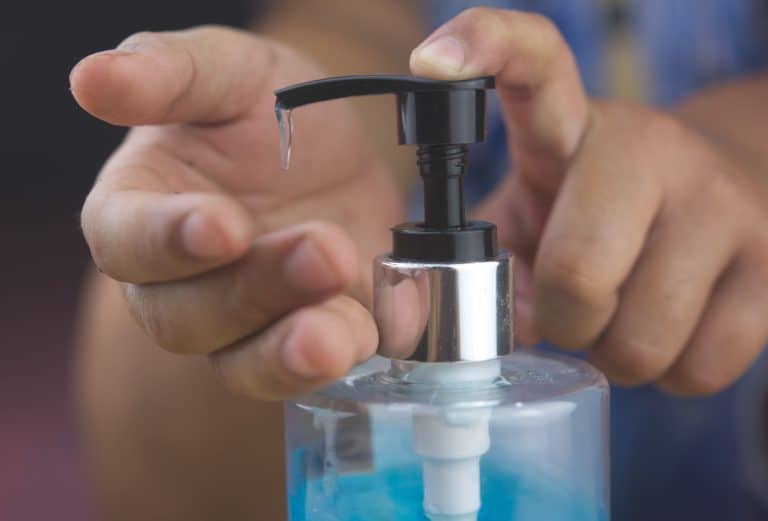
One such way to mitigate the risk of coronavirus transmission is to clean more often. When employees return to work, and you reopen, employers can provide handwashing and drying facilities and hand sanitiser on the entry and exit points. You can continue to display notices outlining the measures you have in place to inform your employees that you have carried out these measures to secure the safety of the workplace. Clean high contact surfaces regularly, and ensure busy areas are cleaned often. Set clear use and cleaning guidance for toilets.
3. Continue to support employees to work from home
Work from home guidance changed on the 19th July to become a recommendation to work from home with a gradual return to the office in summer. This means that employers can plan a return to the office, however due to the ongoing high level of cases, it would be recommended to ensure that employees are still able to easily work from home if needed. For example, if they are required to isolate by NHS Test and Trace they would be easily able to adapt to working from home.
You may be considering hybrid working as you gradually return to the office. Find out more in our guide: Hybrid working; Returning to the Office following the Covid-19 Pandemic
Continue to take reasonable steps to support employees to work from home. This includes maintaining a supportive and consistent dialogue with remote employees, ensuring they have the equipment they need, establishing working arrangements and looking after their mental and physical wellbeing. Issuing a homeworking policy is a great way to include this information in one place for your employees to reference.
4. Minimise social contact
Businesses were previously encouraged to re-design work spaces to allow for 2 metre social distancing when workers return to the workplace. This may have included:
- implementing one way walk-ways;
- opening more entrances and exits;
- Using floor markings to indicate 2m distances
- avoid sharing workstations
- see visitors by appointment only if possible
There are other ways to manage the risk of transmission, for example:
- increase the frequency of handwashing and surface cleaning
- consider if the activity is necessary for the business to operate
- reduce the activity time to as short a time as possible
- use screens and barriers to separate people
- enable colleagues to face away from one another when working;
- organising shift patterns and fixed teams to reduce contact; and
- staggering start times;.
Once you have carried out or reviewed your risk assessment, you may choose to continue using these strategies after 19th July to reduce the risk of transmission and protect your workforce while cases are high.
5. Make sure there is adequate ventilation in enclosed spaces
Employers can maximise air flow in enclosed spaces through the use of natural ventilation, like open windows, and mechanical ventilation, such as fans that bring in fresh air from outside. This will help to reduce the risk of transmission.
Find out more on the HSE website.
6. Utilise testing
The Government made lateral flow testing available to employers, and has further extended availability to the public, recommending testing twice a week.
Please note that employers who are carrying out workplace tests will need to consider the additional data protection safeguards and obligations associated with personal data relating to health.
The ICO have detailed guidance on how to comply with data protection regulations when carrying out workplace testing: ICO data protection guidance for organisations during coronavirus.
Industry specific guidance for working safely after 19th July
The government have released specific guidance for some industries and places of work. These guides have now been updated to reflect the changes occurring in Step 4 of the roadmap from 19th July.
We’ve included links to the government guidance below:
- Guidance for Hotels and other guest accommodation
- Guidance for Events and Visitor Attractions
- Guidance for Restaurants, pubs, bars, nightclubs and takeaway services
- Guidance for Construction and other outdoor work
- Guidance for Offices, factories and labs
- Guidance for Shops, branches and close contact services
There is separate guidance for:
- Guidance for grassroots sport participants, providers and facility operators
- Guidance for schools, further education and childcare providers
- Guidance for wedding and civil partnership ceremonies, receptions and celebrations
- Guidance for vehicles
How can employers implement these changes?
The government guidance for these industries are helpful to employers to create COVID-secure workplaces.
Below, we’ve considered the 10 key areas that we recommend you consider when implementing the changes outlined in the government guidelines.
1. Consider whether your staffing structure needs to change
The government’s Coronavirus Job Retention Scheme enables employers to furlough their staff and claim government support towards wage costs.
Flexible furloughing has enabled employers greater flexibility when considering and monitoring their staffing needs over recent months.
You can read more about these changes in our guide to the Coronavirus Job Retention Scheme.
However, it’s possible that in some cases employers may not need to bring all of their employees back to work. Here are some options to consider around staffing structures.
Continue with furlough leave
The CJRS has been extended until the end of September, so in the meantime you may choose to continue with furlough leave for some, or all, of your staff. Remember to communicate with furloughed employees if you are intending to extend a period of furlough.
Please note that from July, employers will be required to contribute increasing percentages towards furlough pay.
Reducing hours
Where there is a decline in the demand for work but there is still enough work for the business to operate, you could consult with your employees to reduce their hours. This may be particularly relevant where a business still has work for everyone but not to the level that it was prior to the coronavirus pandemic.
Employees will need to agree to such a change but may be more inclined to do so in the circumstances as an alternative to redundancy, particularly if this is done on a temporary basis for the interim. However, employers should consider the impact that this could have on morale and take steps to enhance engagement.
Keep in mind also that you will be able to bring employees back on a flexible basis and still access the furlough leave scheme until the end of September.
Lay off – after furlough
Alternatively, if a lay off clause exists within an employee’s contract of employment then you could lay off staff temporarily after the furlough leave scheme comes to an end. There is still a requirement for employees to receive minimum guarantee payments in line with this. However, employers should bear in mind that if an employee is laid off temporarily for 4 weeks, they will be entitled to a redundancy payment.
Redundancies
If none of the above options are going to achieve the savings required in order for the organisation’s continued survival, another option to consider is redundancies.
It will be the case for many businesses that they no longer require the same number of employees to perform the work, due to a decline in workload, or in some cases the business may need to cease trading altogether. Where this is the case, a redundancy process should be followed.
Further information on carrying out a redundancy process can be found in our guide to carrying out a redundancy process.

When considering redundancies, it’s important to take into account the structure of your organisation, where the work is, where savings need to be made and the future needs of the business.
If you don’t already have one, it’s useful to draw up an organisation chart/structure to compare how the organisation is currently structured with the proposed new structure as this will help to identify which roles are no longer required and if any new roles need to be introduced to support the business in the future.
Recruitment
Some organisations may have seen an increase in workload as a result of the pandemic. Or changes may mean new roles need to filled, even if other positions become redundant.
If this is the case for you, you may be seeking to start a recruitment process. The first step to consider here is the needs of the business and to identify the skills and experience required. Start by drafting a job description to define the role you are recruiting for, and person you’re seeking to fill that position.
2. Consider if you will continue with homeworking or flexible working for some or all of your workforce
During the pandemic, the Government had advised that employees should work from home where possible. From the 19th July this will move to a recommendation while cases are still high, and the Government expect a gradual return to the workplace over the summer.
In some environments, for instance in production, manufacturing and hospitality homeworking won’t always be an option, but for many roles it will be. Organisations will need to balance the requirement for employees to be physically present at work with the need to minimise the risk to their health and safety.
Employers may also benefit in some cases from employees working from home. For instance, they may realise that they no longer need to have an office or building because they have found that homeworking has been successful during this period.
If you are going to continue with homeworking for your organisation, it’s advisable to have a clear homeworking policy in place setting out the expectations and guidance in relation to homeworking.
You can access a free Homeworking Policy template on our guide: How to draft a Homeworking Policy
In addition, many employers are adopting a ‘hybrid-working model’, which involves a mix of office working and homeworking. Find out more about hybrid working in our guide: Hybrid working; Returning to the Office following the Covid-19 Pandemic

Flexible working requests
It’s likely that employers will see a rise in flexible working requests from employees that have worked from home.
Employers will need to carefully consider these requests, particularly given that employees will be able to evidence that this can and has been done.
It may be that certain roles can be performed more effectively from home than employers expected, and it may lead to a change in working practices.
When employers receive requests for flexible working post-pandemic, it will be important to carefully reflect on how the role was performed during lockdown and whether this could be continued on a permanent basis.
A request for flexible working can only be turned down for one of the 8 statutory business reasons, which are:
- it will cost your business too much
- the work cannot be re-organised among other staff
- you are unable to recruit more staff
- quality will be negatively impacted
- the business’ ability to meet customer demand will be negatively impacted
- performance will be negatively impacted
- there is insufficient work for the employee to do when they’ve requested to work
- the request will not fit in with planned changes to the business, such as a re-organisation.
However, it will be important to provide a strong business rationale for this if the employee was working from home during the lockdown.
You may be interested in adopting a hybrid working model. You can read more about this in our guide:
3. Plan the steps you need to take to ensure your workplace meets public health guidelines
If your business is able to re-open or employees return to the workplace after a period of furlough leave, it’s important to ensure that you comply with the guidance set out by Public Health England.
Take time to consider the health and safety guidance we outlined and signposted above that have been issued by the government generally, and more specifically for individual industries and places of work.
4. Consider what you will do if some employees refuse to return to work due to fear of catching coronavirus
It’s likely that employees may be feeling anxious about a return to the workplace. This will particularly be the case if they have friends and family that are vulnerable, or if the employee is in a particularly high risk category, however, the rollout of the vaccine programme may be reassuring for many.
Where employees express concerns about returning to work, it’s important to listen to these and consider their concerns. It’s possible that through discussion with the employee their concerns may be alleviated so it’s important to communicate all of the steps being taken to protect the workforce.
If an employee continues to refuse to return, managers should consider the reason for their refusal. If this is due to a member of their household being at higher risk, then it’s important to consider whether alternative options are available, for example homeworking.
Where this isn’t possible, you’re advised to consider other options carefully. For example, can you continue the employee’s furlough leave, or could time off be taken as holiday or unpaid leave. Alternatively, if the employee is sick, the usual sick pay provisions should apply.
If, through investigation, it transpires that the employee’s concerns are not genuine and they refuse to attend work, this would be unauthorised absence and should be treated in accordance with your disciplinary procedure.
However, it’s important to explore the reasons behind the refusal before considering any disciplinary action. This is primarily due to the fact that the Employment Rights Act 1996, protects employees if they have a reasonable belief that they are in serious and imminent danger and if they are dismissed as a result of action they take in response to this.
For instance, if an employee felt they needed to go home because one of their colleagues was coughing, they may argue that they had reasonable belief they were in real danger. If they are dismissed as a result of unauthorised absence related to this, or resign because the employer forced them to attend work, this could amount to an automatic unfair dismissal. We recommend you seek advice in these circumstances before taking any formal action.
5. Get your policies and procedures in place
Many employers will have already updated their policies and procedures to reflect changes to their working practices as a result of the coronavirus.
Where this hasn’t yet been done, it would be beneficial to review your company procedures to ensure that any temporary variations are detailed ready for a return to the workplace.
For instance, if employees are working from home a homeworking policy would outline arrangements and expectations for employees and the organisation. Similarly, amendments to existing procedures may be required. For example the Attendance Management Policy could be relaxed in light of the coronavirus, or you may need to update your sickness absence policy.
6. Keep an eye on employee engagement
It’s more important than ever to motivate employees and keep them engaged during this difficult time. There are a few simple steps that employers can take:
- Engage employees in training.
- Hold daily virtual team meetings if the team are working remotely.
- Continue to foster relationships in the team via daily check-ins and virtual team socials if the team are working remotely.
- Set an example by ensuring a healthy work life balance – know when to step away from your desk, don’t send emails out of hours and discourage presenteeism.
- Be prepared to be flexible as some employees will have care responsibilities which they will need to manage.
- Offer support on wellbeing. Employees may not be aware of an Employee Assistance Programme that you may already have in place.
- Remain transparent regarding business performance and evolving plans to emerge from lockdown.
- Set expectations but trust your team.
For more on this, read our guide on Employee Engagement in the ‘new normal’.
You may also find our guide useful:
7. Ensure you’re all up to date with employment law

While the current situation is everyone’s main priority and the focus remains on how businesses will continue to function, it’s important not to overlook other employment law changes that took place over the last year which, as a result of the pandemic, may have taken a back seat.
We’ve outlined these changes in our article: Employment Law changes: Past Present and coming up.
For example, on 6 April 2020, a key change came into effect in relation to the way we draft and issue the written statement of employment particulars. These are normally included in contracts of employment. You can read our guide:
If you are recruiting new team members at this time, it will be important to make sure your contracts and employment documentation is up to date.
More recently in April 2021 there were also increases to the national minimum and living wage, as well as increases to statutory payments you need to be aware of.
In addition, IR35 changes came into effect in April 2021. These new rules require medium and large sized private sector companies to assess the employment status of contractors who provide labour through their own intermediary, such as a personal services company or partnership.
If IR35 applies, responsibility for operating PAYE and NICs on the fees paid to the contractor’s intermediary will lie with the fee payer, as they have the contractual relationship with the contractor’s intermediary.
You can read more about this in our guide:
Moreover, in January 2021, the UK introduced a points-based immigration system. Free movement ended for EU nationals travelling to the UK and for all UK nationals travelling to a ‘European Economic Area’ (EEA).
Find out more about the points-based immigration system and how this may impact your recruitment plans in our guide:
For more guidance on how Brexit may impact your team, read our guide:
8. Consider putting in place an employee wellbeing strategy
Poor wellbeing is linked to higher levels of absence and turnover and can also result in lower levels of employee performance and productivity, therefore it’s logical for employers to consider employee wellbeing and adopt a wellbeing strategy.
You can find out more about employee wellbeing strategy in our article:
How to draft an employee wellbeing strategy for your organisation
9. Train your staff
Employees can undertake training during furlough leave. Employees are entitled to receive the national minimum wage for any time spent training so do bear this in mind.
If you have online training or webinars that the employee could attend while on furlough leave then this is a great time to up skill your teams. It can also go some way to helping employees feel valued, particularly if they have been furloughed where other colleagues remain at work.
This could help them to feel part of the team and up skill them in readiness for when they return.
10. Carry out HR Housekeeping
Reviewing your systems and files is a task that can sometimes be pushed to the bottom of the list.
Now could be a good time to ensure your Right to Work checks have been carried out, that you have signed contracts of employment on file for your employees, and that your employees have read important policies, such as data protection. On the 1st July, Right to Work changed to reflect the end of the Home Office grace period following Brexit. You can find out more in our employer’s guide to Brexit: An Employer’s Guide to Brexit
Maintaining COVID safe workplaces
To sum up, the coronavirus pandemic has changed the way we operate, and although most legal restrictions were lifted in England on the 19th July, as employers we must ensure we are rising to their duty of care to protect our employees against the transmission of coronavirus. If you would like any support with implementing any of the above, please do contact our team.